Cyclotron Info
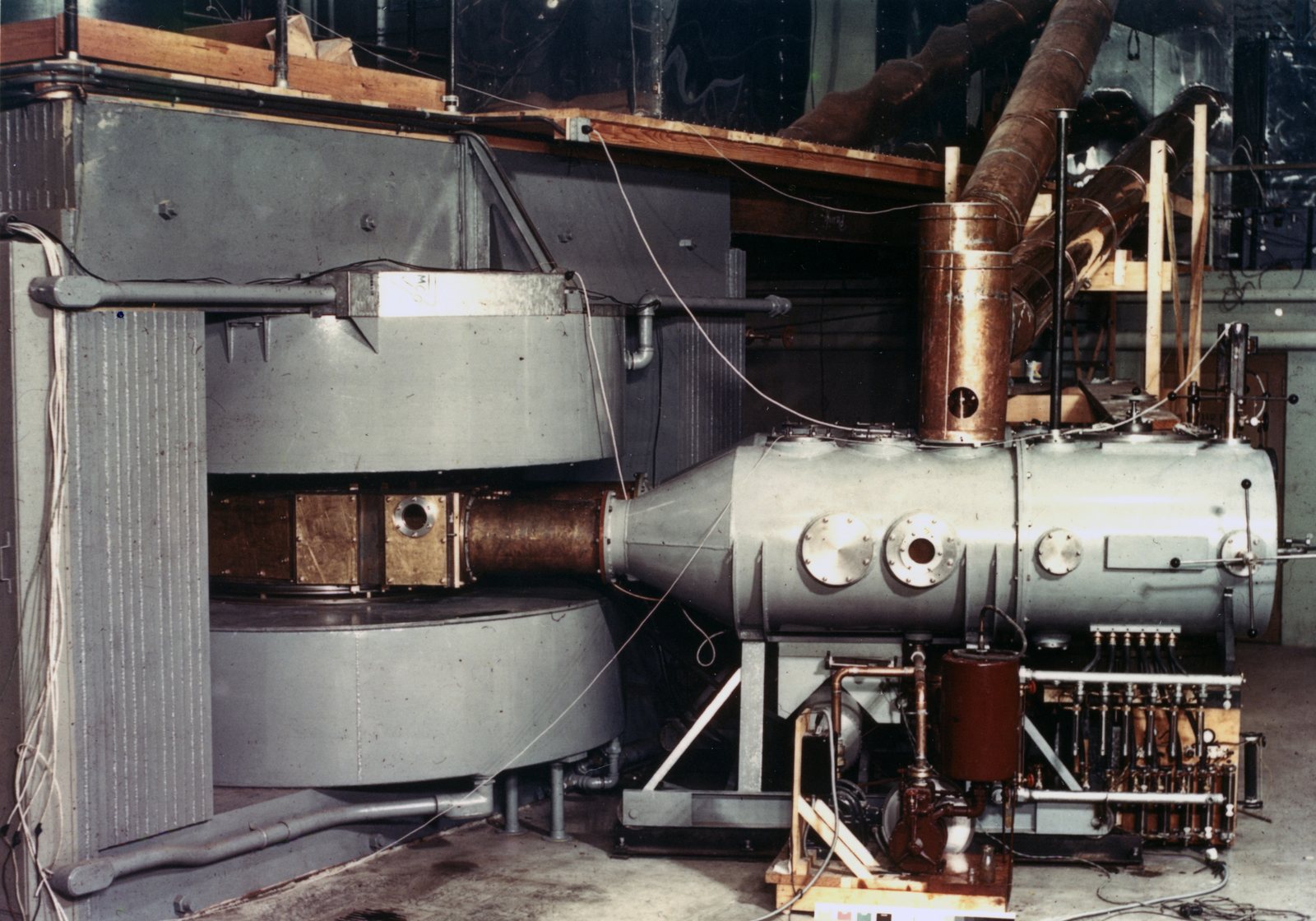
The open reference for understanding, designing, and documenting small cyclotrons. Built for cyclotron enthusiasts — students, hobbyists, amateur builders, and anyone curious about the machine that started high-energy physics.
Why this site? Practical knowledge about small cyclotrons is scattered across ninety years of journal papers, out-of-print books, student theses, defunct project pages, institutional reports, and fifty-one bodies of state regulation. This project gathers it into one place — organized, cited, and source-checked, with its review status made explicit — so the next builder starts from the literature instead of from scratch.
What would you like to do?
-
Understand how a cyclotron works
Why one fixed-frequency voltage keeps accelerating an ion as it spirals outward, what sets the energy a magnet can reach, and where the idea came from.
- How a cyclotron works
- Virtual Cyclotron Laboratory — set the controls, watch the ions (hosted)
- Guided exercises
- History
- Glossary
-
Explore the world’s cyclotrons
1,564 machines in 92 countries on a map and list — research, medical-isotope, therapy and teaching machines — and the ones you can visit.
-
Decide whether to build one
What the 27 documented amateur and school builds cost, how long they took, and that 8 of them have reached beam — read before buying iron.
-
Design a machine
Turn a budget, a space and a power outlet into a costed, planning-grade design, then size each subsystem yourself.
- Cyclotron Builder — planning grade; hosted
- Choosing your machine
- Calculators
- Builder FAQ — half built and stuck? start from the symptom
-
Research the engineering
2,170 sourced design rules by subsystem, each with its formula and citation; 325 library documents; and the free modelling tools that check a design.
-
Study or work in the field
Accelerator career paths from operator to physicist with the credential each actually needs, the university programs that teach it, and a self-study route.
- 1,564 cyclotrons mapped
- 92 countries
- 2,170 sourced design rules
- 325 library documents
- 27 documented amateur builds
- 7 calculators
Census figures are from the quarterly directory snapshot of 2026-10-04.
Starting a design? Open the Design Guide at level 1 — the 42 rules that govern whether any small cyclotron is feasible — and widen to the next level as the design firms up. Or start with the machines themselves, in the amateur builds census.
All sections
-
Learn
How cyclotrons work, their history, what they are used for, safety fundamentals, a realistic starter path — and subsystem deep dives from magnet design to beam dynamics.
-
Design Guide
2,170 sourced design rules for small cyclotrons — magnet, RF, vacuum, ion source, dees, chamber, extraction, and beam measurement — filterable by subsystem, each with formula and citation.
-
Calculators
Interactive calculators for energy, field, and radius; path length and turn count; vacuum requirements; coil geometry; magnet power; lid deflection; RF matching — each with the math explained.
-
Legal
Can you legally build and run a cyclotron? Federal rules and a jurisdiction-by-jurisdiction survey of all 50 US states, with an interactive map.
-
Library
An annotated bibliography of cyclotron and accelerator literature — 325 documents rated for relevance to small-machine builders, from 1930s classics to modern references, with the public-domain construction reports hosted here.
-
Amateur Builds
A census of documented home and school cyclotron builds, successful or stalled, with specs, status, and sources.
-
Worldwide Cyclotron Directory
Where the world’s cyclotrons are: research, medical, and university machines on a filterable map and list — and which ones you can tour.
-
News & Jobs
Automatically aggregated cyclotron and accelerator news, plus a directory of the job boards where accelerator posts appear.